Published On September 22, 2008
IN EACH OF 27 CAGES, set up in a temperature-controlled room in the La Jolla, Calif., lab of researcher Victor Nizet, sat one very sick three-month-old mouse. All the animals had just been infected with Staphylococcus aureus (staph), a major human bacterial pathogen often resistant to medicine’s strongest antibiotics. In this experiment last year, Nizet and his colleagues were testing a new compound, BPH-652, to see whether it could combat the infection better than the antibiotics typically administered.
Three days after injecting the compound, the researchers examined the animals’ kidneys for evidence of infection. To their delight, the staph was almost gone, with levels of the pathogen reduced more than 98%. Nizet was particularly excited because BPH-652 isn’t an antibiotic—it didn’t kill the staph or prevent it from multiplying. Instead, it attacked the infection by stripping away one of staph’s “virulence factors,” toxic molecules that inhibit the immune system.
This outside-the-box approach is one of several beginning to emerge from laboratories around the world to treat antibiotic-resistant infections, which are increasing in number by the day. Already, more people in the United States die of methicillin-resistant Staphylococcus aureus (MRSA) each year (18,650 in 2005) than of HIV/AIDS. And with most large drug companies ending their antibiotics programs, and other research hindered by lack of funding, few new drugs are in the pipeline. Yet failing to find bacteria-defeating solutions is hardly an option.
“[Antibiotics] underpin all of modern medicine,” warned a recent special issue of the journal Nature Reviews Drug Discovery. “Without them, people would be threatened by the slightest injury, births of early-term infants would be near impossible, major surgeries and transplantations would be unfeasible, cytotoxic therapies for cancer would invite deadly infections, and hospital wards would become focal points for infectious diseases. In short, without antibiotics we would reverse the gains in life expectancy that were so hard won in the past century.”
Where once drugs could simply annihilate a bug, now it’s necessary to be more nuanced, to find ways to rid the body of infections without triggering resistance, which is threatening the effectiveness of every antibiotic. What physicians need in this war against microbes, says Bob Hancock, an infectious disease researcher at the University of British Columbia in Vancouver, is more than one approach for dealing with infections that are proving almost infinitely creative in getting around whatever obstacles medicine puts in their way.
BEFORE ANTIBIOTICS SHOWED UP, bacteria pretty much had their way with people. In 1900, all leading causes of death—pneumonia, tuberculosis, diarrhea and enteritis—were often (or, in the case of tuberculosis, always) caused by bacteria. Together they accounted for one-third of all deaths, 40% in children under age five. (Today, no bacterial disease except pneumonia breaks the top 10 causes of death in the United States.) Against that grim backdrop, finding a way to defeat bacterial infections was the scientific order of the day, and in the early 1900s, Paul Ehrlich, director of Germany’s Royal Institute of Experimental Therapy, achieved a first. Ehrlich and his team collected existing synthetic chemicals and tinkered with their molecular structures. After testing hundreds of chemicals against various bugs, they found one capable of killing the bacteria that causes syphilis in rabbits. Ehrlich called the compound Salvarsan, the first systematically discovered drug that treated disease microorganisms in humans.
The next several decades saw other major breakthroughs. Another synthetic compound, sulfonamide, developed in 1932, worked against streptococcal infections in mice. A few years before, Alexander Fleming had discovered that a common mold of the genus Penicillium could killStaphylococcus; he isolated the responsible substance and named it penicillin. In 1939, Australian pathologist Howard Florey and German-born biochemist Ernst Chain led a team of Oxford University scientists who figured out how to mass-produce Fleming’s discovery.
From 1944 through 1968, many antibiotic classes were introduced, including cephalosporins, aminoglycosides and tetracyclines, mostly from microorganisms unearthed in soil. In fact, almost all antibiotics in use today were discovered during that period of furious research. In the past 10 years, the Food and Drug Administration has approved just two new classes of oral or injected antibiotics: the oxazolidinones in 2000 and the lipopeptides in 2003. With the war on infectious diseases largely won, pharmaceutical companies have turned their attention to research that’s more potentially profitable. Yet through it all, bacteria have been mounting a quiet counterattack.
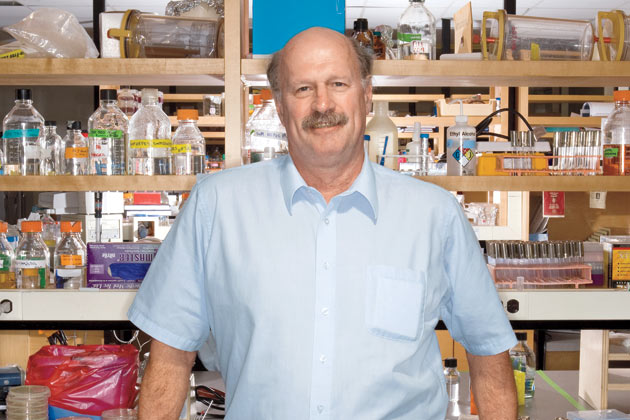
BACTERIAL RESISTANCE TO ANTIBIOTICS IS INEVITABLE. “In almost all cases, resistance follows implementation in the clinic by a very short period of time, often a matter of months,” says Gerry Wright, a biochemist at McMaster University in Ontario. “The minute you start using an antibiotic, you start the clock for its obsolescence.”
Resistance develops in a competition between disease-causing bacteria and the microorganisms on which most antibiotics are based. (Indeed, resistance is not only a product of medicine; many bacteria are typically able to resist a number of natural antibiotics, producing antibacterial substances to fend off competitors.) When someone takes an antibiotic, most bacteria in the body are killed, but the few surviving bacteria often possess a transferable genetic element that not only protects them by producing proteins that fight off attack but can also be easily shared with other bacteria, thus spreading resistance. And the more often the pathogenic bacteria face a particular drug, the more quickly their defenses evolve. When physicians overprescribe antibiotics or prescribe a broad-spectrum drug when a more targeted one would suffice, it only accelerates.
The most notorious antibiotic-resistant organism is MRSA, the bacterium that causes deadly skin infections and doesn’t respond to penicillin or methicillin. MRSA thrives in hospitals, a hotbed of antibiotic resistance. But vancomycin-resistant Enterococci (VRE) can also be dangerous, and other bugs, such as E. coli and Salmonella, are also rapidly developing resistance. And almost a third of the pneumonia bacteria in some parts of the United States are now less responsive to penicillin.
The best answer to drug resistance is new drugs, but in the case of antibiotics, that’s a particularly tall order. To find today’s 16 or so classes of antibiotics, comprising approximately 2,000 individual drugs, scientists had to sift through some 10 million types of microbes. But with most effective compounds already identified, researchers will probably need to test another 10 million just to find one new class.
It’s a painstaking process that typically begins with large-scale, random screening of microorganism-filled solutions made from soils dug up around the world. The solutions are applied to lab plates containing disease-causing bacteria to gauge which may be effective. Each strain takes months to purify, and of the few that show antibacterial ability, many won’t prove safe for humans, at least by the FDA’s increasingly stringent standards. “If you discovered penicillin today, it would never get to market,” Wright says. “Some people are allergic to penicillin and have an anaphylactic reaction that could be fatal. Unless you’ve got nothing else, it gets harder and harder to make new drugs.”
That situation begs for fresh approaches, and scientists at Merck Research Laboratories in Rahway, N.J., have been trying a variation on the traditional method, which tends to turn up the same antibiotics that kill bacteria in the same way (that have the same problems with resistance). By searching for a specific type of hypothetical antibiotic—one that, for example, halts the production of fatty acids essential to the membranes that encapsulate the bacteria—they could, in theory, avoid sorting through already-discovered compounds.
The scientists have seeded lab plates with S. aureus genetically engineered to have low levels of a protein called FabF, which helps synthesize fatty acids. That makes this version of the pathogen 50 times more sensitive to any antibiotic that targets the bacteria’s fatty acids. So although normal S. aureus bacteria with high levels of FabF might survive an assault—as they have, during previous screenings—creating the ultrasensitive bacteria could help the scientists isolate an antibiotic that works against the staph and could take on the full-strength pathogen.
After screening 83,000 natural products at three concentrations from soils, the Merck scientists finally found a substance from South Africa that killed the sensitized staph. That compound, which they named platensimycin, inhibits FabF. When used to treat mice infected with staph, it eradicated the bacteria. It also worked against many other types of infection, and the company may begin clinical trials.
Scientists at several laboratories have discovered additional compounds that act against other novel bacterial targets, such as cell division. And researchers at the Scripps Institution of Oceanography in La Jolla are now screening strains of bacteria from the ocean bottom to see whether they might be of use. But the problem with platensimycin and the rest of these potential drugs is that they’re all still traditional antibiotics, and bacteria will eventually develop resistance to them. Attacking virulence factors, which researchers have been investigating since the 1980s, could prove more effective.
UNDER THE MICROSCOPE, STAPHYLOCOCCUS AUREUS is a pleasing shade of gold (aureus means golden) thanks to a pigment called staphyloxanthin, which is similar in structure to carotenoids, the colorful antioxidants found in many fruits and vegetables. In their work on staph, Victor Nizet, at the University of California, San Diego, and George Liu, now at Cedars-Sinai Medical Center and UCLA, discovered that staphyloxanthin is also partly responsible for the bacterium’s virulence. The antioxidant shield that the pigment provides seems to protect the bug from the oxidants that the body’s white blood cells use to destroy bacteria. In fact, Nizet discovered that when his laboratory used genetic techniques to remove the golden pigment from the staph, the mice no longer got sick.
Upon reading Nizet and Liu’s work, Eric Oldfield, a chemist at the University of Illinois at Urbana-Champaign, realized that staphyloxanthin formation in bacteria looks chemically similar to early cholesterol formation in humans. He wondered whether cholesterol drugs could prevent the synthesis of staphyloxanthin. Oldfield contacted Nizet, and, with a few other specialists, tried out several cholesterol drugs. One, BPH-652, did a wonderful job of preventing staph from becoming golden, thus allowing a mouse’s immune system to kill the bacteria. Previously, clinical trials of BPH-652 for fighting cholesterol stalled after failing to work as well as statins. Soon Nizet hopes to add the drug to the antibacterial arsenal.
Yet even if BPH-652 succeeds as a magic bullet against MRSA, that’s just one of many increasingly drug-resistant bacteria. “The problem with antivirulence is it’s very targeted, and just knocking out a single virulence factor in a single organism may not be very cost effective,” says Hancock of the University of British Columbia. Still, given how huge a problem drug resistance has become, even an expensive, narrow fix may be better than nothing. Stuart Levy, an antibiotic resistance expert at Tufts University, calls work with virulence factors “the way of the future.” He is leading a symposium on antivirulence strategies at the Interscience Conference on Antimicrobial Agents and Chemotherapy in October.
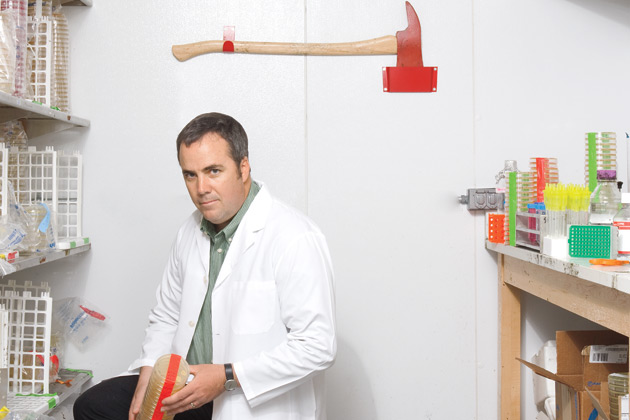
BACTERIA ARE EVERYWHERE—in the soil and air, on our skin and in our food. On a typical day we may be exposed to millions of them. Most of the time they don’t make us sick, largely because of the multilayered defenses of the innate immune system. At its simplest level, innate immunity consists of a barrier of skin or mucus that prevents infectious agents from getting inside the body. If a pathogen does get through, innate immunity follows up with a complex system of cells and proteins that attack foreign intruders. But innate immunity can’t stop all bacteria, and scientists have long wondered how the system might be enhanced. In one approach, they have tried stimulating cell proteins known as toll-like receptors, which normally trigger an immune response. But artificially activating those receptors can promote sepsis, a raging inflammatory response that causes 200,000 deaths a year.
In looking for a way to ramp up innate immunity without sepsis, Hancock has studied peptides, small proteins that serve, with the rest of the innate immune system, as a quick, first-line defense against invading bacteria. (The adaptive immune system—antibodies and the like—takes days to ramp up and kill invading pathogens.) Hancock found he could engineer peptides that promote the bacteria-killing parts of the innate immune system without also igniting the body’s sometimes-dangerous inflammatory response. In 2002 he created a peptide called IDR-1 that, given to mice during a window from 48 hours before an MRSA infection to six hours afterward, prevented or treated the infection without sepsis or allergic reaction. What’s more, Hancock thinks that IDR-1 could be used to re-energize traditional antibiotics to which bacteria have become resistant. In work with animals, IDR-1 has greatly improved the performance of antibiotics that were losing effectiveness. If it works in humans, one possible application would be to give it to people entering the hospital to help them avoid common infections.
Hancock considers this approach a natural way to combat bacteria. “I think we often arrogantly feel we can trump evolution,” he says. “But with antibiotics, we tried to overextend a particular weapon. For every weapon in nature there’s a counterweapon—antibiotic resistance, in this case. But with innate immunity, you’re using a response worked out by evolutionary forces. It can be very effective.”
ENHANCING INNATE IMMUNITY, DISABLING VIRULENCE FACTORS and attacking bacteria by interfering with fatty acid production or other essential processes all hold promise, as does targeting antibiotic resistance directly. One drug already on the market, Augmentin, contains amoxicillin and clavulanate potassium, a beta-lactamase inhibitor. (Beta-lactamase is an enzyme that bacteria use to destroy the amoxicillin; by inhibiting it, the antibiotic can still be effective.) Other research is focused on efflux pumps, transport proteins that churn antibiotics back out as soon as they enter. Eliminating the pumps might return power to older antibiotics. Still other scientists are working to prevent bacterial biofilms, colonies of bacteria that are all but impossible to eradicate.
Yet despite the excitement surrounding these approaches, most of the potential new drugs are far from clinical use. “We are still in a crisis period,” says Tuft’s Levy. “Most of the large pharmaceutical companies have left the drug-discovery field. And with bacteria becoming resistant to multiple drugs, it’s hard to know which antibiotic to use. People are dying from resistant infections every day.”
Dossier
Bad Bugs, No Drugs: As Antibiotic Discovery Stagnates…A Public Health Crisis Brews, Infectious Diseases Society of America white paper, July 2004. The IDSA discusses the antibiotic-resistance problem in plain English, detailing the number of deaths from antibiotic-resistant infections, the lack of drugs coming down the pharmaceutical pipeline and what policymakers should do to address the challenge.
“Platensimycin Is a Selective FabF Inhibitor With Potent Antibiotic Properties,” by Jun Wang et al.,Nature, May 18, 2006. An account of the exciting discovery of one of the first new classes of antibiotics in more than 20 years through the use of a novel search method.
“A Cholesterol Biosynthesis Inhibitor Blocks Staphylococcus aureus Virulence,” by Chia-I Liu et al.,Science, March 7, 2008. This paper demonstrates that a never-approved cholesterol drug could one day be used to render staph bacteria harmless in humans.